Using Investments in Solar Photovoltaics as Inflation Hedges


Mainstream strategies for protecting wealth from inflation involve diversification into traditional assets like common stocks, gold, fixed-income securities, and real estate. However, a significant contributor to inflation has been the rising energy prices, which have been the main underlying cause of several past recessions and high inflation periods. Investments in distributed generation with solar photovoltaics (PV) present a promising opportunity to hedge against inflation, considering non-taxed profits from PV energy generation. To investigate that potential, this study quantifies the return on investment (ROI), internal rate of return (IRR), payback period, net present cost, and levelized cost of energy of PV by running Solar Alone Multi-Objective Advisor (SAMA) simulations on grid-connected PV systems across different regions with varying inflation scenarios. The case studies are San Diego, California; Boston, Massachusetts; Santiago, Chile; and Buenos Aires, Argentina. Historical inflation data are also imposed on San Diego to assess PV system potential in dynamic inflammatory conditions, while Boston and Santiago additionally analyze hybrid PV-battery systems to understand battery impacts under increasing inflation rates. Net metering credits vary by location. The results showed that PV could be used as an effective inflation hedge in any region where PV started economically and provided increasingly attractive returns as inflation increased, particularly when taxes were considered. The varying values of the ROI and IRR underscore the importance of region-specific financial planning and the need to consider inflation when evaluating the long-term viability of PV systems. Finally, more capital-intensive PV systems with battery storage can become profitable in an inflationary economy.
- Free source code = https://osf.io/geqwf/
- Methods: Solar Alone Multi-objective Advisor (SAMA)
- User Manual: https://osf.io/7ztae
Media
How to Use SAMA
See Also

- A Review of Phase-Change Material-Based Thermal Batteries for Sustainable Energy Storage of Solar Photovoltaic Systems Coupled to Heat Pumps in the Building Sector
- Decarbonization of Residential Houses in Northern Climates: Traditional vs Fully Electrified Approaches in Ontario Canada
- Residential Sizing of Solar Photovoltaic Systems and Heat Pumps for Net Zero Sustainable Thermal Building Energy
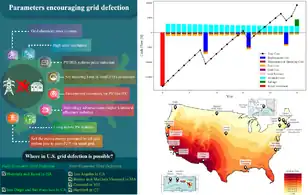
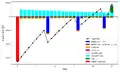
- Emerging economic viability of grid defection in a northern climate using solar hybrid systems
- The Potential for Grid Defection of Small and Medium Sized Enterprises Using Solar Photovoltaic, Battery and Generator Hybrid Systems
Read More
- Achieving 100% Renewable and Self-Sufficient Electricity in Impoverished, Rural, Northern Climates: Case Studies from Upper Michigan, USA
- Low emissions analysis platform model for renewable energy: Community-scale case studies in Nigeria
- Demonstration of the integrated rural energy planning framework for sustainable energy development in low-income countries: Case studies of rural communities in Nigeria
- Decentralized Renewable Hybrid Mini-Grids for Rural Communities: Culmination of the IREP Framework and Scale up to Urban Communities
- Economic viability of captive off-grid solar photovoltaic and diesel hybrid energy systems for the Nigerian private sector
- Simulations of Greenhouse Gas Emission Reductions from Low-Cost Hybrid Solar Photovoltaic and Cogeneration Systems for New Communities
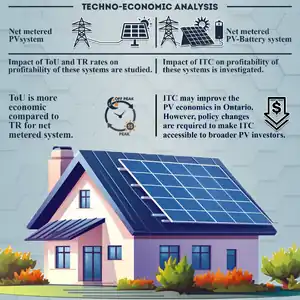
- Economics of Grid-Tied Solar Photovoltaic Systems Coupled to Heat Pumps: The Case of Northern Climates of the U.S. and Canada
- Decarbonizing rural residential buildings in cold climates: A techno-economic analysis of heating electrification
- Policies to Overcome Barriers for Renewable Energy Distributed Generation: A Case Study of Utility Structure and Regulatory Regimes in Michigan
- Can grid-tied solar photovoltaics lead to residential heating electrification? A techno-economic case study in the midwestern U.S.
- Adapting the European typology approach for building stock energy assessment (TABULA) concept for the developing world: The Nigerian case study
- Using a Ledger to Facilitate Autonomous Peer-to-Peer Virtual Net Metering of Solar Photovoltaic Distributed Generation
- The threat of economic grid defection in the U.S. with solar photovoltaic, battery and generator hybrid systems
| Authors | Seyyed Ali Sadat, Kashish Mittal, Joshua M. Pearce |
|---|---|
| License | CC-BY-SA-4.0 |
| Cite as | Seyyed Ali Sadat, Kashish Mittal, Joshua M. Pearce (2025). "Using Investments in Solar Photovoltaics as Inflation Hedges". Appropedia. Retrieved November 28, 2025. |