Land activism
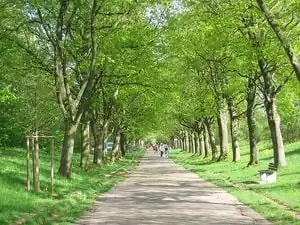
This article brings together any information which may be useful or of interest to community agency networks (CANs) and community groups involved in or with an interest in Land activism. Communities may develop an interest in Land activism in response to concerns about justice or several challenges such as climate change, environmental degradation, or food or livelihood insecurity.
"...sprawling extractive land uses are a lethal threat to the living world. ...unless we count the hectares and decide together how best they should be used, we will lose the struggle to defend the habitable planet." , George Monbiot, Apr 21, 2023... theguardian.com
News
 The Cambodian women rising up to protect their communal land, positive.news (Nov 20, 2025)
 - COP30 host Brazil creates 10 new Indigenous territories, BBC News (Nov 18, 2025)
- How land restoration could address malnutrition among India’s Indigenous families, theconversation.com (Oct 07, 2025)
Video
Networks

The International Land Coalition is a global alliance of civil society and farmers' organisations, United Nations' agencies, NGOs, and research institutes. ILC's stated mission is to "promote secure and equitable access to and control over land for poor women and men through advocacy, dialogue, knowledge sharing, and capacity building". Its vision is that "secure and equitable access to and control over land reduces poverty and contributes to identity, dignity, and inclusion". The ILC aims to build the capacity of its members and partners through people-centred development.
The ILC Secretariat is hosted by the International Fund for Agricultural Development (IFAD) in Rome, Italy, and is supported by regional offices for Africa, Asia, Latin America & the Caribbean, and EMENA (Europe, Middle East and North Africa) – the latter based at the ILC Secretariat itself.
Community action projects
Community land buyouts
Communities can sometimes buy the land they live on and manage them through locally-run trusts. There are many examples of this in Scotland including Eigg, Assynt and Ulva.
Community land trust
Main article: Community land trust
A community land trust (CLT) is a nonprofit, community-based corporation that owns land in trust for the benefit of a defined geographic area and manages that land over the long term on behalf of the community. CLTs typically retain ownership of the land and convey long-term ground leases to individual homeowners, housing cooperatives, nonprofit organizations or other entities that own the buildings and improvements. By separating the ownership of land from the ownership of housing and other structures, CLTs seek to preserve long-term affordability and protect community assets from speculative increases in land value.
CLTs have been used to steward a variety of community assets, including affordable owner-occupied and rental housing, community gardens, civic and cultural facilities and commercial spaces. Many CLTs describe their purpose as balancing the interests of individual leaseholders, who seek secure tenure and limited equity, with the interests of the wider community, such as maintaining affordable housing, preventing displacement and promoting racial and economic inclusion. A commonly cited structure for a "classic" CLT is a membership-based nonprofit with a tripartite board in which leaseholders, other community residents and public or professional stakeholders each hold one-third of the seats.
Since the late 20th century, CLTs have been adopted in urban, suburban and rural settings in the United States, Canada, Europe and the United Kingdom, and, more recently, parts of Latin America, Africa, Asia and Oceania. A 2024 survey cited by the Lincoln Institute of Land Policy reported more than 300 CLTs in the United States, including 308 CLTs in 48 states, the District of Columbia and Puerto Rico, up from 289 in 2021.
Resources
- Land Matrix, global and independent land monitoring initiative that promotes transparency and accountability in decisions over land and investment. see also Land grabbing
- Landportal, information and knowledge sharing about land issues
Common land
Common land is collective land (sometimes only open to those whose nation governs the land) in which all persons have certain common rights, such as to allow their livestock to graze upon it, to collect wood, or to cut turf for fuel.
A person who has a right in, or over, common land jointly with another or others is usually called a commoner.
In Great Britain, common land or former common land is usually referred to as a common; for instance, Clapham Common and Mungrisdale Common. Due to enclosure, the extent of common land is now much reduced from the hundreds of square kilometres that existed until the 17th century, but a considerable amount of common land still exists, particularly in upland areas. There are over 8,000 registered commons in England alone.
Land justice
The concepts of justice and equity may be involved in land reform. For example one of The International Land Coalition core values is Justice and Equity. The Coalition strives to overcome practices that marginalise or dis-empower people. This includes applying the principle of gender justice, and recognising the importance of economic justice to address inequality, create opportunity, and overcome poverty and hunger. They also suggest land rights as a pathway out of the climate crisis...International Land Coalition
Land reform
Agrarian reform and land reform have been a recurring theme of enormous consequence in world history. They are often highly political and have been achieved (or attempted) in many countries.
Land reform (also known as agrarian reform) involves the changing of laws, regulations, or customs regarding land ownership, land use, and land transfers. The reforms may be initiated by governments, by interested groups, or by revolution.
Land reform is often considered a contentious process, as land is a key driver of a wide range of social, political and economic outcomes. The structure and distribution of land rights has been linked to state formation, economic growth, inequality, political violence, and identity politics, making land reform highly consequential for the long-term structures of society.
Campaigns
- Land Rights Now, international alliance campaign to secure Indigenous and community land rights everywhere. added 15:46, 20 December 2023 (UTC)
See also: Open spaces activism, Rural sustainability, Urban sustainability, Urban sustainability news, Urbanization, Citizens' assembly, Land use
local information and news can be found, or shared, via our many location pages
| Authors | Phil Green |
|---|---|
| License | CC-BY-SA-4.0 |
| Cite as | Phil Green (2021–2025). "Land activism". Appropedia. Retrieved November 28, 2025. |