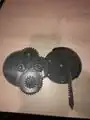
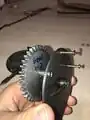
A dial indicator is a tool used to measure linear displacements. It accomplishes so via the use of a plunger that's constricted to a measured linear movement. Simply, when the plunger is pushed into the body of the tool, the distance it is pushed in is "indicated" on the "dial" face of the tool. This is useful for any kind of precise measurement of thickness, depth, width, and can even be used to ensure a machining device or tool is accurately trammed.
TOOL REQUIREMENTS MAY VARY BASED ON NUT & BOLT SELECTION
Skills and knowledge needed
3D Printing Knowledge & Capabilities
Understand the needs & application for a dial indicator
Ability to assemble fasteners and critically aligned plastic components
Technical Specifications and Assembly Instructions
Download and print the plastic components listed in the bill of materials
Recommended:
Material: PLA
Layer Height: 0.25 mm
Shell Thickness: 0.8 mm
Fill Density: 100%
Print Speed: 50 mm/s
Printing Temperature: 215 C
Clean burrs and excess plastic from parts that may be remaining from print
Align the corresponding components from the bill of materials to the pictures posted below while ensuring:
All holes align
All gears mesh together
Assemble Fasteners so that the head of the screws are on the face of the indicator
Lightly tighten fasteners so that gears spin freely with minimal slop
Assemble needle so that needle is spaced away from dial face
Once completed, use a protractor to mark the face of the indicator in whichever scale is desired
Common Problems and Solutions
If the gears don't align and interface properly, first ensure they are oriented with the proper gear in the proper location and proper orientation. Also ensure the layering of the gears is correct and in order. Another possibility is that the holes within the body and top components aren't lined up correctly.
If the plunger is difficult to move: The indicator works best when the dial is rotated to move the plunger to it's location rather than using the plunger to rotate the high gear ratio.
Cost savings
87g of PLA ($1.57 USD) + Hardware ($1.58 USD) = $3.15 USD Total