Comfrey
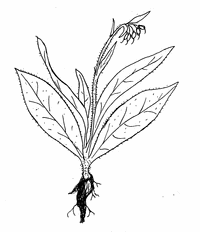
Comfrey (Symphytum officinale) is a perennial and herbaceous flowering plant of the order Boraginaceae (borages and forget-me-nots), with a black, turnip-like root and large, hairy, broad leaves. Blooms are small, bell-shaped, white, cream, purple or pink flowers. It is native to Europe, found in damp, grassy places, and is widespread throughout the British Isles on river banks and ditches, generally close to a waterway or seep. Comfrey has long been recognised by both organic gardeners and herbalists for its great usefulness and versatility, notably for the former as a source of natural fertilizer; of particular interest is the 'Bocking 14' cultivar of Russian comfrey (Symphytum x uplandicum). This strain was developed during the 1950's by Lawrence D. Hills, the founder of the Henry Doubleday Research Association (the organic gardening organisation, itself, named after the Quaker pioneer who first introduced Russian comfrey to Britain in the 1910s) following trials at Bocking, near Braintree, the original home of the organisation.
Propagation
'Bocking 14' is sterile, and therefore will not set seed—one of its advantages over other cultivars, as it will not spread or proliferate out of control; thus it is typically propagated from root cuttings or plant divisions. The home gardener can produce their own 'offsets' from mature, strongly-grown plants by driving a spade or sterilised knife horizontally through the leaf clumps about 3" below the soil surface, typically at the start of springtime or early summer, when plants are at their most active. This divides the crown from the lowest roots, which can then be split into pieces. Both sections are then replanted. The original "top plant" will quickly recover, and each lower piece can be propagated with the growing points just below the soil surface; these will quickly emerge as new plants. When choosing plants to divide, ensure that they are strong, healthy specimens, with no signs of insects, rust or mildew. When dividing comfrey plants, take care not to drop root fragments around, or dispose of them casually on the compost heap, as each small piece can potentially take-root; comfrey can be a very difficult plant to get rid-of. Alternatively, plantlets or offsets can also be purchased from select garden centres, nurseries, or by mail-order from the HDRA (amongst other specialist nurseries), in order to build-up an initial stock of plants.
Cultivation
The comfrey bed should be well-prepared, weeded thoroughly, and dressed with composted manure or earthworm castings, if available. Offsets should be planted 2-3 feet apart, with the growing points buried just below the surface, whilst root segments should be buried about two inches (5.08 cm) deep. Keep the bed well-watered (but not drowning in water, as this can lead to rot) until the young plants are established. A topdressing of mulch, leaf mould and/or small pebbles or gravel can further aid in moisture retention within the soil, while also improving drainage and soil composition over time.
Comfrey should not be harvested in its first season growing, as it needs time to become established. Any flowering stems should be pruned, as these will weaken the plants in their early development. Comfrey should continue to be regularly watered until well-established. It is a fast-growing plant, producing huge amounts of foliage during a growing season, hence is very nitrogen hungry—hence leading to its value as a homemade fertilizer. Although they will continue to grow, regardless, the plants will benefit from the addition of more manure applied as a mulch, and can also be mulched with other nitrogen rich materials such as lawn mowings. Comfrey is one of the few plants that will tolerate the application of fresh urine (diluted 50:50 with water), although this should not be regularly added as it may increase unwanted salt levels in the soil and have adverse effects on soil life, such as microbes or worms.
Mature comfrey plants can be harvested up to four or five times a year. They are ready for cutting when about 2 feet (60 cm) high; depending on seasonal conditions, this is usually in April. Comfrey will rapidly regrow after cutting or pruning, and will be ready for further pruning about 5 weeks later. It is said that the "best" time to cut comfrey is shortly before flowering, to maintain the energy and focus of the plant towards foliar growth rather than blooming. Additionally, this is when it is at the most-potent, in terms of the alkaloids and nutrients contained in the plant. Comfrey will continue growing into November, but it is not advisable to continue taking cuttings after September, in order to allow the plants to build-up winter reserves and enter into a period of dormancy. As the leaves die-back and break-down in winter, nutrients and minerals are transported back to the roots for use the following spring. Comfrey should be harvested by using shears or a sickle to cut the plant about 2" above the ground, taking care whilst handling it as the leaves and stems are covered in hairs that can irritate the skin. It is advisable to wear gloves when handling comfrey. Dormant comfrey may be insulated with a layer of mulch, leaves, straw, wood shavings, and/or any other organic matter, taking care to keep the dormant rootballs free from pooling water after periods of rain, as rot is more of a risk during dormant periods.
Despite being sterile, 'Bocking 14' Russian comfrey will steadily increase in size. It is, therefore, advisable to split it up every few years (and, at the same time, propagate more plants that can be shared with fellow gardeners!). It is, however, difficult to remove comfrey once established, as it is very deeply-rooting, and any fragments left in the ground will regrow. Rotovation can be successful, but may take several seasons. The best way to eradicate comfrey is to very carefully dig it out, removing as many and as much of the roots as possible. This is best done during hot, dry, summer weather, whence the less humid conditions will help to kill-off any remaining root stumps. Comfrey is generally trouble-free once established, although weaker or stressed plants can suffer from comfrey rust or mildew. Both are fungal diseases, although they rarely seriously reduce plant growth, thus they do not (generally) require serious control. However, any number of homemade remedies may be applied, such as diluted isopropyl alcohol, and infected plants should never be used for propagation purposes, lest the infection be spread.
Medicinal Uses
Rosemary Morrow writes that "Russian comfrey and garlic could together, according to natural health usage, cure almost half the present ills of western civilisation" (The Book Of Herbs, Pan 1976). An extravagant claim perhaps, but it does indeed have a wealth of medicinal uses. One of it's country names was 'knitbone', a reminder of it's traditional use in healing. The herb contains allantoin, a cell proliferant that speeds up the natural replacement of body cells. This means that it will promote the swift healing of damaged or injured tissues, as well as maintaining cell growth and preventing diseases. Comfrey has been used to treat a wide variety of ailments ranging from bronchial problems, broken bones, sprains, arthritis, gastric and varicose ulcers, severe burns, acne and other skin conditions. It is also said to have bone and teeth building properties in children, and have value in treating "many female disorders". In past times comfrey baths were popular to repair the hymen and thus 'restore virginity'. Constituents of comfrey also include mucilage, steroidal saponins, tannins, pyrrolizidine alkoloids, inulin, vitamin B12 and proteins.
Excessive internal usage of comfrey should be avoided because of pyrrolidizine alkaloids, which have been linked by some research to cancer in rats. Avoid using comfrey on dirty or deep wounds, as the rapid healing properties of the allantoins may trap dirt or pus, leading to the formation of absesses.
Fertiliser Uses
Comfrey is a particularly valuable source of fertility to the organic gardener. It is very deep rooted and acts as a dynamic accumulator, mining a host of nutrients from the soil. These are then made available through it's fast growing leaves (up to 4-5lb per plant per cut) which, lacking fibre, quickly break down to a thick black liquid. There is also no risk of nitrogen robbery when comfrey is dug into the soil as the C:N ratio of the leaves is lower than that of well-rotted compost. Comfrey is an excellent source of potassium, an essential plant nutrient needed for flower, seeds and fruit production. It's leaves contain 2-3 times more potassium than farmyard manure, mined from deep in the subsoil, tapping into reserves that would not normally be available to plants.
There are various ways in which comfrey can be utilised as a fertiliser, these include:
- Comfrey for potatoes- freshly cut comfrey should be wilted for a day or two, then laid in potato trenches about 2" deep. Avoid using flowering stems as these can root. The leaves will rapidly break down and supply potassium rich fertiliser for the developing potato plants.
- Comfrey as a compost activator- include 2-3" deep layers of comfrey in the compost heap to encourage bacterial activity and help to heat the heap. Comfrey should not be added in quantity as it will quickly break down into a dark sludgey liquid that needs to be balanced with more fibrous, carbon rich material.
- Comfrey liquid fertiliser- can be produced by either rotting leaves down in rainwater for 4-5 weeks to produce a ready to use 'comfrey tea', or by stacking dry leaves under a weight in a container with a hole in the base. When the leaves decompose a thick black comfrey concentrate is collected. This must be diluted @ 15:1 before use.
- Comfrey as a mulch- a 2" layer of comfrey leaves placed around a crop will slowly break down and release plant nutrients. it is especially useful for crops that need extra potassium, such as tomatoes, and also fruit bushes like gooseberries and currants.
- Comfrey potting mixture- originally devised using peat, environmental awareness has lead to a leaf-mould based alternative being adopted instead. Two year old, well decayed leaf mould should be used, this will absorb the nutrient rich liquid released by the decaying comfrey.
- In a black plastic sack alternate 3-4" layers of leaf mould and chopped comfrey leaves. Add a little dolomitic limestone to slightly raise pH. Leave for between 2-5 months depending on the season, checking that it does not dry out or become too wet. the mixture is ready when the comfrey leaves have rotted and are no longer visible. Use as a general potting compost, although it is too strong for seedlings.
Original content from Quercusrobur at http://permaculture.wikia.com/
- ---
COMFREY
(Sent in by "Star")
Wild comfrey was brought to America by English immigrants for medicinal uses. The allantoin content of comfrey, especially in the root, has resulted in its use in folk medicine for healing wounds, sores, burns, swollen tissue, and broken bones. Allantoin, found in milk of nursing mothers and the fetal allantois, appeared to affect the rate of cell multiplication. Wounds and burns seemed to heal faster when allantoin was applied due to a possible increase in number of white blood cells. Comfrey has been reported to promote healthy skin with its mucilage content that moisturizes and soothes, while the allantoin promotes cell proliferation.
The allantoin applied to external wounds is either a 0.4% solution or a 2% ointment. An effective allantoin formulation is difficult to prepare from comfrey due to the low and variable content of this substance. Hart (1976) reported that dried comfrey leaves contain 0.1 to 1.6% allantoin while dried roots have 0.4 to 1.5%. Since fresh leaves are 85% water, they could not contain more than 0.2% allantoin. It would require anywhere from 8 oz to 8 lb of dried comfrey leaves per quart of water to produce a 0.4% solution that would be effective. Comfrey produces large amounts of foliage from late May until hard frosts in October or November. This crop has been used as a salad green and potherb because it was considered a good source of protein and a rare plant-derived source of vitamin B12. Vitamin B12 is produced usually by soil bacteria and fungi or in the small intestines of some animals.
Wild comfrey was brought to America by English immigrants for medicinal uses. The allantoin content of comfrey, especially in the root, has resulted in its use in folk medicine for healing wounds, sores, burns, swollen tissue, and broken bones. Allantoin, found in milk of nursing mothers and the fetal allantois, appeared to affect the rate of cell multiplication. Wounds and burns seemed to heal faster when allantoin was applied due to a possible increase in number of white blood cells. Comfrey has been reported to promote healthy skin with its mucilage content that moisturizes and soothes, while the allantoin promotes cell proliferation.
The allantoin applied to external wounds is either a 0.4% solution or a 2% ointment. An effective allantoin formulation is difficult to prepare from comfrey due to the low and variable content of this substance. Hart (1976) reported that dried comfrey leaves contain 0.1 to 1.6% allantoin while dried roots have 0.4 to 1.5%. Since fresh leaves are 85% water, they could not contain more than 0.2% allantoin. It would require anywhere from 8 oz to 8 lb of dried comfrey leaves per quart of water to produce a 0.4% solution that would be effective. Comfrey produces large amounts of foliage from late May until hard frosts in October or November. This crop has been used as a salad green and potherb because it was considered a good source of protein and a rare plant-derived source of vitamin B12. Vitamin B12 is produced usually by soil bacteria and fungi or in the small intestines of some animals.
The following is from the Chemist and Druggist of August 13, 1921:
'Allantoin is a fresh instance of the good judgment of our rustics, especially of old times, with regard to the virtues of plants. The great Comfrey or consound, though it was official with us down to the middle of the eighteenth century, never had a very prominent place in professional practice; but our herbalists were loud in its praise and the country culler of simples held it almost infallible as a remedy for both external and internal wounds bruises, and ulcers, for phlegm, for spitting of blood, ruptures, haemorrhoids, etc. For ulcers of the stomach and liver especially, the root (the part used) was regarded as of sovereign virtue. It is precisely for such complaints as these that Allantoin, obtained from the rhizome of the plant, is now prescribed. One old Syrupus de Symphyto was a rather complicated preparation. Gerard has a better formula, also a compound, which he highly recommends for ulcers of the lungs. The old Edinburgh formula is the simplest and probably the best: Fresh Comfrey leaves and fresh plantain leaves, of each lb.ss.; bruise them and well squeeze out the juice, add to the dregs spring water lb.ij.; boil to half, and mix the strained liquor with the expressed juice; add an equal quantity of white sugar and boil to a syrup.'
Comfrey roots, together with Chichory and Dandelion roots, are used to make a well-known vegetation 'Coffee,' that tastes practically the same as ordinary coffee, with none of its injurious effects.
See also
External links
- planting comfrey from seed - short video about the benefits of comfrey and starting comfrey from seed
- comfrey discussion at permies.com
- Marsh Creek Farmstead - Comfrey root cuttings to grow your own
| Authors | Anonymous1 |
|---|---|
| License | CC-BY-SA-3.0 |
| Ported from | https://permaculture.fandom.com/wiki/Comfrey (original) |
| Cite as | Anonymous1 (2006–2025). "Comfrey". Appropedia. Retrieved November 28, 2025. |