CerviScope
| Health topic | Maternal mortality |
|---|---|
| Health classification | Diagnosis |
| Type | |
|---|---|
| Authors | |
| Location | North Carolina, United States |
| Status | Clinical trial |
| Years |
Problem being addressed
Cervical cancer is the leading cause of women's death in developing countries. The Western Journal of Medicine estimates that it causes about 190,000 deaths per year. This is largely in part to the lack of early detection of the condition and therefore, lack of preventative measures.
Detailed description of the solution
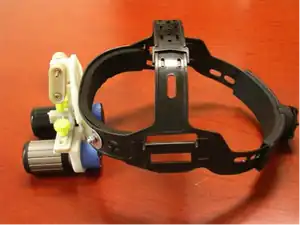
This portable colposcope is a cervical cancer screening device that allows up to 8X magnified visual inspection of the cervix. The doctor applies acetic acid to the cervix to expose precancerous lesions, turning them white. White or green light is then used to illuminate the cancerous tissue. Whether the lesion needs to be treated or removed can be decided from there. This lightweight, inexpensive, electricity-independent device can identify precancerous tissue in a matter of minutes.
Designed by
- Designed by: Family Health Ministries and the ImaGyn group at Duke University
- Manufacturer location: Florida, Oregon
When and where it was tested/implemented
Ethiopia, Malawi, Guatemala, Pakistan, India, Nigeria, Kenya, Tanzania, Argentina, Honduras, Nicaragua and Haiti, 1992
Funding Source
Goldman Sachs, Applied Technologies Inc., Clinton Bush Haiti Fund ($731,130)
References
Other internally generated reports
Family Health Ministries. (July 2012). Colposcope Development. Retrieved November 13 2013 from here
Externally generated reports
Maternova. (January 11 2013). Cerviscope. Retrieved November 13 2013 from here
Chevalier-Batik, Sandra H. Holy Hormones Journal. (May 2 2009). The Story Behind the CerviScope. Retrieved November 13 2013 from here
IP and copyright
Approval by regulatory bodies or standards boards
| Authors | Kelly Wojcik |
|---|---|
| License | CC-BY-SA-3.0 |
| Cite as | Kelly Wojcik (2013–2022). "CerviScope". Appropedia. Retrieved November 28, 2025. |