Cell Phone Malaria Detector
| Health topic | Malaria |
|---|---|
| Health classification | Diagnosis |
| Type | Malaria detector |
|---|---|
| Authors | |
| Location | Glasgow, Scotland |
| Status | |
| Years |
Problem being addressed
Diagnosing malaria through blood detection can often times be difficult because not many cells in the blood will contain malaria.
Detailed description of the solution
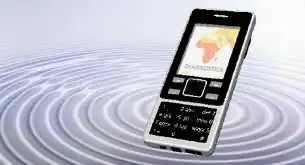
Different cells respond to surface acoustic waves in different ways. Response to different frequencies is dependent upon elasticity and shape of the cells. Malaria changes the elasticity and shape of red blood cells. Surface acoustic waves are used to sort out the cells infected by malaria from those that aren't. The waves are emitted utilizing a cell phone.
Describe relevance to developing country settings
This device can be utilized using mobile phones which are readily available in many developing settings. It can be used to diagnose malaria in any area that it is needed where mobile phones are available.
Designed by
The following people were involved in the design from the University of Glasgow:
- Jon Cooper
- Mike Barrett
- Dr. Lisa Ranford-Cartwright
Funding Source
The Bill & Melinda Gates Foundation provided $100,000 for this endeavor.
References
Internally generated reports
University of Glasgow. (2011, July 5). Experts to develop mobile phone malaria detector. University of Glasgow: University news. Link available here.
Externally generated reports
BBC News. (2011, Jul 5). Bill Gates backs Glasgow University malaria project. BBC News. Link available here.
Mensah, Kent. (2009, April 24). AfricaNews - Malaria device detector invented. AfricaNews.com. Link available here.
"University of Glasgow | Bill & Melinda Gates Foundation." The Bill & Melinda Gates Foundation. N.p., n.d. Web. 3 Feb. 2012.
| Authors | Evashiu |
|---|---|
| License | CC-BY-SA-3.0 |
| Cite as | Evashiu (2012–2024). "Cell Phone Malaria Detector". Appropedia. Retrieved November 28, 2025. |