Food activism
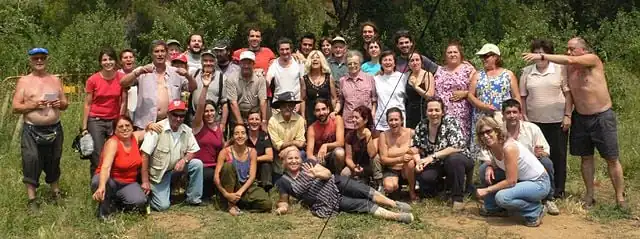
The aim of this page is to recognise, celebrate and encourage the self-empowerment of community agency networks (CANs) and community groups' Food activism. Learn about how communities positively impact through innovations, different projects and collaborations. This article focuses on networks, events and concepts relevant to Food activism. Food activism resources and Community action food projects are separate articles.
Video
News
 ‘If there’s a free alternative, I’ll eat healthily’: how Sweden devised brilliant school meals, theguardian.com (Nov 07, 2025)
 - Sharing soil, sweat and tears, ffcc.co.uk (Oct 30, 2025) — Are farm partnerships the future? We talk to the team behind Abunda to find out
- The hidden cost of ultra-processed foods on the environment: ‘The whole industry should pay’, theguardian.com (Oct 08, 2025)
- Q&A: The role of soil health in food security and tackling climate change, carbonbrief.org (Oct 29, 2025)
- How land restoration could address malnutrition among India’s Indigenous families, theconversation.com (Oct 07, 2025)
- Protecting artisanal fisheries, Ghana passes landmark legislation, Victoria Schneider, news.mongabay.com (Aug 22, 2025)
- Fish mint, Himalayan chives and berry pickle: how wild ingredients are transforming school lunches in India, theguardian.com (Sep 15, 2025)
- How Fresh Fish From Monterey Bay Reaches School Lunch Trays, reasonstobecheerful.world (Aug 07, 2025)
- A Food-Growing Tradition Finds New Roots in the Mississippi Delta, reasonstobecheerful.world (Jul 01, 2025)
- A New York Rooftop Blossoms with Lessons About Food Literacy, insideclimatenews.org (Jun 24, 2025)
- How growing and foraging food can become a common part of cities, theconversation.com (Apr 24, 2025)
- Glasgow Seed Library is a collection of seeds and a community of growers [CCA], Daily Alternative (May 13, 2025)
- Kenya outlawed the sharing of Indigenous seeds. A village choir is fighting back, globalvoices.org (May 10, 2025)
- Meet the seed collector restoring California’s landscapes - one tiny plant at a time, theguardian.com (Apr 19, 2025)
- Carbon capture in Mediterranean soil: how farmland can trap greenhouse gases, theconversation.com (Jan 30, 2025)
- The New Livestock Farm Is a Forest, Too, reasonstobecheerful.world (Jun 02, 2023)
Events
 May 4 - 10, 2025 (Sun - Sat) — International Compost Awareness Week
- May 20, 2025 (Tue) — World Bee Day, May 20 each year
- Oct 01, 2025 (Wed) — World Vegetarian Day, Oct 1 each year, bringing awareness to the ethical, environmental, health, and humanitarian benefits of a vegetarian lifestyle
- Oct 16, 2025 (Thu) — World Food Day, celebrated every year around the world on 16 October, often with a focus on food security
- February 21 - March 1, 2026 (Sat - Sun) — Real Bread Week, annual, international celebration of additive-free bread and the people behind its rise
- Mar 01, 2026 (Sun) — World Seagrass Day, Mar 1, annually. Raising awareness about seagrass and its important functions in the marine ecosystem.
Networks

At the beginning of the 20th Century the majority of the population in developed countries were involved in agricultural production. By the beginning of the 21st Century less than 10% of the population in countries including the US, UK, France and Japan worked in agriculture. This situation is largely due to Green Revolution production methods, increased mechanization, consolidation of land holdings by large corporations, and decreased profitability of agricultural products. However, some counter-trends are beginning to make agricultural employment more appealing. These include concerns about the health and sustainability of synthetics-based agriculture, the food sovereignty and local food movements, and a passion for the work itself. Thus, there are now many individuals seeking to begin a career in agriculture that did not grow up in farming families.
These young and beginning farmers face a number of challenges to getting their careers started.
- Soil Care Network, global community of scholars, researchers, growers, and civil society members from a wide range of backgrounds, all animated by the love of, fascination with, and dedication to soils. We believe that soils are key to addressing current challenges to human and ecological flourishing. And we believe that improving the state of soils and ensuring an abundant future for all life requires action across academic disciplines. added Philralph (talk) 17:27, 16 February 2021 (UTC)
- Open Food Network, global network of people and organizations working together to build a new food system. "Together, we develop open and shared resources, knowledge and software to support a better food system."
- Food Swap Network
Pam Warhurst from Incredible Edible Todmorden, 12/5/2011, on vimeo
- Incredible Edible network. The Incredible Edible project is an urban gardening project which was started in 2008 by Pamela Warhurst, Mary Clear and a group of like minded people in Todmorden, West Yorkshire, England, UK. The project aims to bring people together through actions around local food, helping to change behaviour towards the environment and to build a kinder and more resilient world. In some cases, it also envisions to have the groups become self-sufficient in food production, hence having all food being produced locally.
- Since its conception, the Incredible Edible ethos has been taken up by communities all over the world and there are now 120 Incredible Edible official groups in the UK and more than 700 worldwide. In 2008 to help sustain existing groups and continue to inspire new ones in the UK, the Incredible Edible Network was launched with Pam Warhurst as its chair and Tanya Wall, as its operational lead.
- In the UK, these groups' collective success has begun to directly influence decision-makers both on a national and local level. In response, the network has evolved from a resource for members into a fully fledged movement, simply known as Incredible Edible.
10 Steps Toward an Incredible Edible Town, Dec 3, 2013
Community food security
Community food security (CFS) is a relatively new concept that captures emerging ideas about the central place of food in communities. At times it refers to the measure of food access and availability at the community level, and at other times to a goal or framework for place-based food systems. It builds upon the more commonly understood concept of food security, which refers to food access and availability at an individual or household level (in health and social policy, for instance) and at a national or global level (e.g., in international development and aid work). / See also Food Sovereignty
Food security news
- Q&A: The role of soil health in food security and tackling climate change, carbonbrief.org (Oct 29, 2025)
- How land restoration could address malnutrition among India’s Indigenous families, theconversation.com (Oct 07, 2025)
- Protecting artisanal fisheries, Ghana passes landmark legislation, Victoria Schneider, news.mongabay.com (Aug 22, 2025)
- Community grows in Sooke's new garden, sookenewsmirror.com (Aug 12, 2025)
- A Food-Growing Tradition Finds New Roots in the Mississippi Delta, reasonstobecheerful.world (Jul 01, 2025)
- A New York Rooftop Blossoms with Lessons About Food Literacy, insideclimatenews.org (Jun 24, 2025)
- A map, a myth and a pre-Incan lagoon: the man who brought water back to a drought-ridden town, theguardian.com (Jun 13, 2025)
- The regen farmers challenging food system foundations, wickedleeks.riverford.co.uk (Jun 05, 2025) — large-scale regenerative farming study renews hope for nature-friendly food producers
- How growing and foraging food can become a common part of cities, theconversation.com (Apr 24, 2025)
- How India’s ‘millet ambassador’ preserves ancient grains – and helps promote food security, The Guardian (Jun 23, 2023)
Food justice

The food justice movement is a grassroots initiative which emerged in response to food insecurity and economic pressures that prevent access to healthy, nutritious, and culturally appropriate foods. The food justice movement moves beyond increasing food availability and works to address the root cause of unequal access to adequate nutrition. Like other Environmental Justice initiatives, the food justice movement advocates for rights-based solutions that identify the underlying human rights that allow individuals to achieve adequate food security and nutrition. This differs from policy-based solutions that focus on food availability and affordability by increasing food production or lowering the cost of food.
Food justice addresses various issues such as the ability to grow or purchase healthy food, diet-related health disparities, unequal access to land, and inadequate wages and working conditions in agriculture.
Food justice recognizes the food system as "a racial project and problematizes the influence of race and class on the production, distribution and consumption of food". This encompasses farm labor work, land disputes, issues of status and class, environmental justice, public politics, and advocacy.
Food justice is closely connected to food security and food sovereignty. According to Anelyse M. Weiler, Professor of Sociology at University of Victoria, "Food security is commonly defined as existing 'when all people, at all times, have physical, social and economic access to sufficient, safe and nutritious food which meets their dietary needs and food preferences for an active and healthy life'" Food sovereignty includes similar principles but differs from food security in that, "Food sovereignty involves a broader vision than food security, asserting communities' power to democratically manage productive food system resources such as land, water and seeds, and to engage in trade on their own terms rather than being subjected to speculation through international commodity markets." Food sovereignty advocates for a shift from corporate-controlled food systems to local food systems.
One component of food sovereignty is farmworker justice. Anna Erwin, Professor of Environmental Social Sciences explained some of the challenges that farmworkers who, "traditionally make low wages, have higher levels of food insecurity than the general U.S. population, and work regularly in dangerous conditions." Many farmworkers in the United States are undocumented immigrants who are less likely to mobilize against unfair working conditions out of fear of deportation and loss of. Farmworker justice highlights the important role of farmworkers in food systems and necessitates farmworker rights to ensure their continued ability to feed themselves, contribute to the global food supply, and protect the environment.
It is argued that lack of access to good food is both a cause and a symptom of the structural inequalities that divide society. A possible solution presented for poor areas includes community gardens, fairness for food workers, and a national food policy.
Article 25 of the Universal Declaration of Human Rights states: "Everyone has the right to a standard of living adequate for the health and well being of himself and of his family, including food, clothing, housing and medical care and necessary social services, and the right to security in the event of unemployment, sickness, disability, widowhood, old age or other lack of livelihood in circumstances beyond his control."
The Food and Agricultural Organization of the United Nations states that the right to food is "The right to feed oneself in dignity. It is the right to have continuous access to the resources that will enable you to produce, earn or purchase enough food to not only prevent hunger, but also to ensure health and well-being. The right to food only rarely means that a person has the right to free handouts."
Local and seasonal food
Local food or the local food movement is a "collaborative effort to build more locally based, self-reliant food economies - one in which sustainable food production, processing, distribution, and consumption is integrated to enhance the economic, environmental and social health of a particular place."
More video: The Joy of Local Food on Vimeo
Seasonal food
Greater local connection with food and food growing enables communities to better appreciate food in season, thereby strengthening the local food economy.
Foodshed
A foodshed is the geographic region that produces the food for a particular population. The term is used to describe a region of food flows, from the area where it is produced, to the place where it is consumed, including: the land it grows on, the route it travels, the markets it passes through, and the tables it ends up on. "Foodshed" is described as a "socio-geographic space: human activity embedded in the natural integument of a particular place." A foodshed is analogous to a watershed in that foodsheds outline the flow of food feeding a particular population, whereas watersheds outline the flow of water draining to a particular location. Through drawing from the conceptual ideas of the watershed, foodsheds are perceived as hybrid social and natural constructs.
Developing Community Action Projects from the concept of Foodshed
This section has been AI generated: AI Overview from a Google search, 15:09, 13 August 2025 (UTC). Question/prompt: what work for communities is implied by the concept of foodshed?
The concept of a foodshed implies community work focused on building a more localized and sustainable food system. This includes efforts to reduce the distance between food production and consumption, strengthen community food security, and support local farmers and producers.
Here's a more detailed breakdown:

* Reducing food miles
Foodsheds encourage sourcing food from within a defined geographic area, minimizing the distance food travels and reducing transportation-related emissions and costs.
* Promoting local agriculture
This involves supporting local farmers and producers, encouraging them to sell their products within the community, and fostering a vibrant local food economy.
* Enhancing food security
By reducing reliance on distant food sources, foodsheds can improve a community's ability to feed itself, especially during disruptions to global supply chains.
* Building community resilience
Local food systems can be more adaptable to changing environmental conditions and economic challenges, contributing to overall community resilience, according to Sustain: the alliance for better food and farming, PDF: sustainweb.org
* Connecting producers and consumers
Foodshed initiatives often involve creating platforms for direct interaction between farmers and consumers, such as farmers' markets, community-supported agriculture (CSA) programs, and farm-to-table initiatives.
* Promoting food literacy
Understanding where food comes from, how it's grown, and how to prepare it is an important aspect of building a sustainable food system.
* Encouraging collaboration
Foodsheds often involve collaboration among farmers, consumers, local businesses, and community organizations to build a more integrated and resilient food system, according to Growing Communities, growingcommunities.org
* Reducing environmental impact:
By reducing transportation and promoting sustainable agricultural practices, foodsheds can minimize the environmental footprint of food production and consumption, according to Wikipedia,
* Promoting social equity
Efforts to build local food systems can also focus on ensuring access to affordable, healthy food for all community members, particularly those facing food insecurity.
* Supporting local economies
Local food systems can create jobs, boost local businesses, and contribute to the overall economic well-being of a community, according to thefoodshed.ca.
In essence, the concept of a foodshed implies a holistic approach to community development that integrates food systems with social, economic, and environmental well-being, says Transition Culture.
Methods of Distributing Food within a Local Foodshed
The “farm-to-table” movement is focused on producing food locally within a foodshed, and delivering it to local consumers. Methods of Distributing Food within a Local Foodshed include Farmers’ markets, Roadside stands, Pick-your-own, Subscription farming and Community-supported agriculture.
Local Foodshed Mapping
The internet can be used to locate foodshed maps of almost any area. Some maps are interactive, where sources in an area can be found for organic produce, microbreweries, farmers’ markets, orchards, cheese makers, or other specific categories within a 100-mile radius. A 100- mile radius is considered "local food" because it is large enough to reach beyond a big city, and small enough to feel truly local.
Foodsheds and Sustainability
Buying local food within a foodshed can be seen as a means to combat the modern food system, and the effects it has on the environment. It has been described as “a banner under which people attempt to counteract trends of economic concentration, social disempowerment and environmental degradation in the food and agricultural landscape.” Choosing to buy local produce improves the environmental stewardship of producers by reducing the amount of energy used in the transport of foods, as well as greenhouse gas emissions.
Seeds news
- Glasgow Seed Library is a collection of seeds and a community of growers [CCA], Daily Alternative (May 13, 2025)
- Kenya outlawed the sharing of Indigenous seeds. A village choir is fighting back, globalvoices.org (May 10, 2025)
- Meet the seed collector restoring California’s landscapes - one tiny plant at a time, theguardian.com (Apr 19, 2025)
- Growing and sharing seeds can boost mental health, positive.news (Mar 31, 2025)
- Drone tree-seeding trial could ‘revolutionise’ the expansion of rainforests say exponents, positive.news (Mar 18, 2025)
- Hand-selected seeds are set to bring riot of colour and life to new road in Cornwall, positive.news (Dec 11, 2024)
- ‘Not just a museum’: Kenya’s seed bank offers unexpected lifeline for farmers, theguardian.com (Oct 31, 2024)
- Community seed banks offer hope for the Amazon across Brazil’s soy belt, news.mongabay.com (Feb 15, 2024)
- The seed guardians of Peru trying to save the potato, BBC Future (Oct 03, 2023)
- Seeds of the people: how communities are protecting the future of food, positive.news (Apr 27, 2021)
Campaigns
- Compassion in World Farming, campaigning and lobbying animal welfare organisation. It campaigns against the live export of animals, certain methods of livestock slaughter, and all systems of factory farming.
- Feedback, environmental organisation campaigning to end food waste at every level of the food system
- I know who grew it, campaign to fix broken food and farming
- Think.Eat.Save
Near you
local information and news can be found, or shared, via our many location pages
See also: Food security, Food Sovereignty, Portal:Food and agriculture, Agroecology, Biodiversity, Ethical consumerism, Free stuff, Localism, Sharing, Community land trust
External links
- Wikipedia: Allotment (gardening), City farm, Community food security, Community gardening, Community-supported agriculture, Community-supported fishery, Foodshed, Food bank, Food cooperative, Food rescue, Garden sharing, Gleaning, Guerrilla gardening, Local food, Seed bombing, Seed library, Seed saving, Seed swap, Seedy Sunday, Slow Food includes Criticisms section, Terra Madre
- Sustainable Rice Platform, added 15:02, 24 July 2023 (UTC)
- CrowdFarming, Farm fresh food directly from the farmer. added 17:28, 17 December 2020 (UTC)
- Fallen Fruit is a Los Angeles based artists' collaboration composed of David Burns and Austin Young. The project was originally conceived in 2004 by David Burns, Matias Viegener and Austin Young. Since 2013, David and Austin have continued the collaborative work.
- Using photography and video as well as performance and installation art, Fallen Fruit's work focuses on urban space, neighborhood, located citizenship and community and their relationship to fruit.
- Farm from a Box
- The Food Commons
- FIAN International
- GIY International, Together we grow
- Mundraub.org (German?)
- Seed Freedom, global movement to defend seed freedom
- Shareyourmeal.net, What's your neighbor cooking?
| Authors | Phil Green |
|---|---|
| License | CC-BY-SA-3.0 |
| Cite as | Phil Green (2015–2025). "Food activism". Appropedia. Retrieved November 28, 2025. |